Health and Safety Policy for Cleaners Harrow
 Our Health and Safety policy sets out how cleaning teams work safely, protect others, and maintain high standards across every site. This policy applies to all tasks carried out by cleaners in Harrow, including routine cleaning, deep cleaning, waste handling, and the use of equipment and chemicals.
The purpose of this policy is to reduce risk, prevent injury, and ensure that every cleaner understands their responsibilities. We believe that safe working is part of professional service delivery, so all staff must follow approved procedures, use protective equipment correctly, and report hazards without delay.
All workers are expected to act with care, keep work areas tidy, and complete tasks in a way that protects themselves, clients, visitors, and colleagues. Cleaners Harrow should always follow site rules, respect access restrictions, and stop work if a situation becomes unsafe.
Risk assessments are completed before work begins and are reviewed when conditions change. These assessments identify common hazards such as slips, trips, falls, exposure to chemicals, manual handling injuries, electrical risks, and contact with contaminated waste.
Where possible, hazards must be removed or reduced at source. If a risk cannot be eliminated, suitable controls must be introduced. This may include warning signs, restricted access, safe storage, improved ventilation, or additional training for specific tasks. Cleaning professionals must never ignore a hazard because a job appears routine.
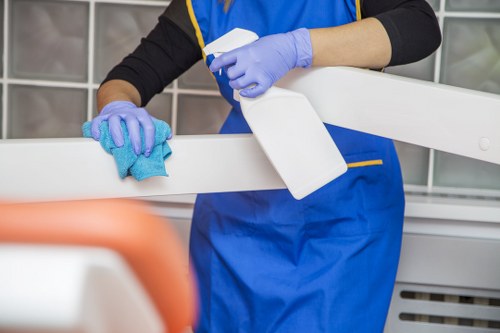 Personal protective equipment, including gloves, aprons, masks, and slip-resistant footwear where required, must be used correctly and maintained in good condition. PPE is a final barrier and does not replace safe working methods, careful planning, or proper supervision.
Training and competence are central to this policy. Every cleaner must receive instruction on safe chemical use, correct dilution, label reading, manual handling, emergency actions, and the safe operation of machines such as vacuum cleaners or floor equipment.
Managers are responsible for ensuring staff are only assigned tasks they are trained and fit to perform. New employees should be supervised until they demonstrate safe working practices. Refresher training must be provided whenever equipment, products, or methods change.
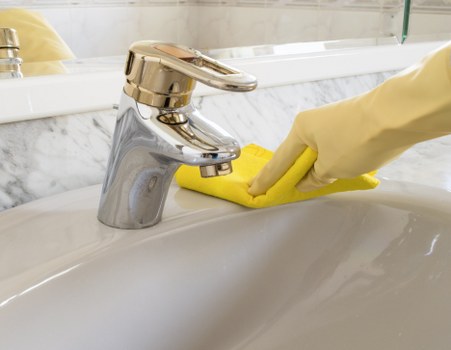 Cleaning products must be stored securely and used exactly as instructed by the manufacturer. Never mix chemicals unless the product guidance clearly allows it. Correct ventilation should be maintained when using sprays or stronger products, and containers should always be clearly labelled.
Safe manual handling is essential when moving bins, furniture, supplies, or equipment. Cleaners should assess the load before lifting, use mechanical aids when available, and avoid twisting or overreaching. If an item is too heavy or awkward, it should be moved with assistance.
Slips and trips are among the most common risks in cleaning work. Floors should be inspected before and during cleaning, with spillages marked and cleared as soon as possible. Cables, hoses, and tools must be positioned carefully so they do not create a hazard for anyone nearby.
Equipment checks should be carried out before use. Damaged tools, frayed cables, faulty plugs, or unstable machines must be taken out of service immediately and reported. Only approved equipment should be used, and it must be cleaned, stored, and maintained according to procedure.
Waste must be handled responsibly and in line with site arrangements. Sharp objects, contaminated materials, and general waste should be separated where required and placed in suitable containers. Cleaners Harrow must never compress bags by hand or place fingers into waste containers.
Accident and incident reporting is a key part of keeping everyone safe. Any injury, near miss, unsafe condition, or equipment failure must be reported as soon as possible. Prompt reporting allows corrective action to be taken and helps prevent the same issue from happening again.
 In an emergency, cleaners must remain calm and follow the site’s evacuation and first-aid arrangements. If there is a fire, chemical spill, or serious injury, the task should stop immediately and the area should be made safe if this can be done without risk.
 Supervisors must ensure that work schedules allow enough time for safe cleaning. Rushing can lead to missed hazards, poor technique, and unnecessary accidents. Good planning, clear communication, and appropriate staffing are essential to safe operations.
We also expect all cleaners to act responsibly toward the environment and the people around them. Water should be used carefully, products should be measured accurately, and waste should be reduced where practical. Safety, quality, and environmental care should support one another in every task.
This policy is reviewed regularly to make sure it remains effective, practical, and up to date. Changes in working methods, equipment, or regulations will be reflected in updated procedures. All staff are required to read, understand, and follow the policy as part of their role.